Chozha succession crisis
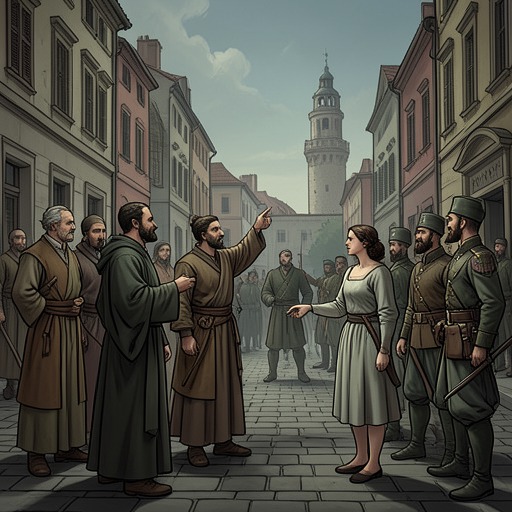
Ponniyin SelvanThe Chozha succession crisis is a prolonged contest over who will inherit the throne and whether the kingdom can remain intact while rival claims and alliances gather force. Its danger lies not only in the competing prospects of Aditha Karikalan and Madhuranthakan, but also in the widening gap between prior royal decisions, the emperor’s later declarations, aristocratic bargaining, and the will of the people. As reports and rumors outrun reliable information, a dispute over succession threatens to become both a civil conflict and a crisis of political legitimacy.
Inheritance, precedent, and the designated heir
The crisis is shaped by decisions made before the most urgent confrontations. Aditha Karikalan had been publicly crowned heir by his father, Sundara Chozha. That designation gives Aditha a powerful claim grounded in a direct royal act, but it does not erase the rival case based on Madhuranthakan’s place in the family line. The competing arguments therefore invoke different kinds of legitimacy: an established appointment on one side, and an account of inherited right and an earlier succession decision on the other.
The kingdom’s older political commitments are made tangible in the recollection of Aditha’s birth. Twenty-four years earlier, he was born in the palace at Thirukkovilur, where celebrations drew kings and chieftains from Chozha Nadu and Thondai Mandalam. The assembled lords brought forces said to number at least thirty thousand, and the feasting and festivities were so lavish that the host’s family treasury was emptied within three days. Aditha’s name itself joined the memory of two celebrated warriors: some had wished him named for Karikal Valavan, others for Rajadithyar, and the name chosen commemorated both. His political identity is thus presented as bound to the dynasty’s martial inheritance and to the alliances surrounding his family from birth.
That inherited standing does not keep the succession question settled. When Aditha later discusses the dispute at Kadambur, he acknowledges that his father appears to have changed his mind and now wants Madhuranthakan on the throne. He explains his reluctance to travel to Thanjavur partly through the prospect of having to face his father’s injunction directly. The tension is not simply between two princes: it is between a public act that named an heir and a later royal intention that may displace him.
Factions, bargaining, and the threatened division
Aristocratic competition turns uncertainty into a practical danger. Early reports describe the Pazhuvettarayars and Kodumbalur Velaar as close to battle, with lords assembling at Kadambur Sambuvaraiyar’s palace in an effort to prevent fighting. Aditha is expected there too. The gathering is consequently more than a meeting of nobles: it is a place where negotiations over the succession take place under the pressure of armed rivalries.
A proposed compromise would divide the kingdom between the two claims, assigning territory south of the Kollidam to Madhuranthakan and the north to Aditha. Its advocates present partition as a way to settle competing rights and avert prolonged danger. Yet the proposal threatens the unity of a realm described as having grown through generations of sacrifice, extending from Kumari to the Krishna River. Sundara Chozha rejects division outright. He declares that Madhuranthakan may be crowned ruler of an undivided Chozha realm, even if his own sons or the Pazhuvettarayars object. His position both endorses Madhuranthakan’s accession and refuses the territorial bargain suggested in its name.
Aditha, in turn, uses the possibility of renouncing his own claim to expose the cost of the nobles’ proposal. He accepts that Madhuranthakan’s inheritance may have merit and says he could yield his right, but attaches a different purpose to his own future: a northern invasion backed by three hundred thousand soldiers, a year’s provisions and equipment, and three hundred ships. He proposes that Parthibendra Pallava command the navy while he leads the campaign. The proposal does not amount to a simple acceptance of the settlement under discussion; it redirects the question from dividing the kingdom toward military expansion, while demonstrating the scale of resources Aditha associates with his claim and ambitions.
Rumor, public feeling, and the absent prince
The reported drowning of Arulmozhi Varman sharply intensifies the crisis. News of his presumed death is said to have left Chozha Nadu in turmoil, and travelers arriving from the region are reported to predict hostilities. The political consequences of the rumor depend on more than its truth: it changes the balance of possible successors and heightens public suspicion of the ruling factions.
A warning about the danger of disclosing that Arulmozhi is alive reveals how his presence could alter the contest. If Madhuranthakan were chosen while Arulmozhi remained in the country, the warning argues, many Chozha subjects would reject the outcome; Arulmozhi would therefore be safer kept from public view until the succession was settled. Another warning predicts that simply making his survival known could cause the kingdom to erupt. These arguments present concealment as a temporary measure intended to prevent popular allegiance from turning an already unstable inheritance dispute into open rebellion.
The fear of revolt is connected to specific allegations. People are said to believe that Sundara Chozha is imprisoned within his own castle, that ships have been sent to arrest Arulmozhi, and that the Pazhuvettarayars arranged for the prince to drown. The evidence presents these as public beliefs, not as established facts. Their circulation nonetheless makes political authority precarious: if Arulmozhi were openly present, popular support might produce an immediate attempt to crown him, while the Pazhuvettarayars are already described as readying their forces and Kodumbalur Periya Velaan is marching toward Thanjavur with a substantial army. Sundara Chozha fears that such pressures could bring a fratricidal war and leave the kingdom divided beyond recovery.
Marriage and alliance as political instruments
The succession struggle reaches into the marriage plans made for the younger generation. Manimekalai is first presented with a future as Madhuranthakan’s wife, a prospect her family and Kandamaran associate with advancement at court and the possibility that her future son might eventually contend for the throne. Her parents and brother participate in promoting that prospect, showing how marriage is treated as a means of fastening family interests to a possible ruler.
Manimekalai’s view changes when she learns that Madhuranthakan had been concealed in the closed palanquin associated with the Pazhuvoor queen. The queen herself had not entered the women’s quarters or met the royal ladies, and the revelation about who occupied her palanquin causes Manimekalai’s favorable impression of Madhuranthakan to collapse. Later, her family abandons the proposed match. Their hints turn instead toward Aditha, while news of visits by Aditha from Kanchi and Periya Pazhuvettarayar from Thanjai raises expectations around Kadambur. The Pazhuvoor Ilaiya Rani is also expected to come, and Manimekalai is told that the queen has taken responsibility for the new marriage efforts.
A separate political calculation makes the proposed Aditha–Manimekalai marriage appear useful to his faction. A companion argues that the match could draw Sambuvaraiyar and Kandamaran to Aditha, isolate the Pazhuvettarayars, reduce the influence of the Pazhuvoor Ilaiya Rani, and weaken Madhuranthakan’s hopes of accession. The proposal therefore makes private attachment and family advancement part of a broader contest for support. Aditha declines to treat marriage as the purpose of his visit to Kadambur, however, and says that an immediate peril concerns him more than wedding plans.
Crisis deepened by competing intentions
The conflict is intensified by the difficulty of distinguishing negotiation from manipulation. Before Aditha’s journey, warnings reach him that he is going among enemies disguised as friends. He is told that reports of a possible marriage to Sambuvaraiyar’s daughter and a secret division of the realm may conceal purposes not yet understood. The warning does not establish the full intention behind the invitation; it underscores that even the participants cannot confidently identify the political design in which they are entangled.
Aditha later recalls that Vallavarayan Vandhiyathevan, Azhwarkkadiyaan Nambi, and Aniruddhar all sent warnings against his visit to Kadambur. His recollection emphasizes that the danger had been recognized by people connected to different channels of counsel, yet did not prevent the encounter. At Kadambur, Aditha considers the possibility of answering the conspirators with extreme force, then says that thoughts of his father restrain his anger. His response exposes the strain between personal rage and filial restraint without resolving the threat he perceives.
The atmosphere grows still more charged when Aditha accuses Aniruddhar of wanting Madhuranthakan crowned and the whole empire turned into a fervently Vaishnavite realm. This is Aditha’s allegation, not an independently confirmed account of Aniruddhar’s purpose. Its presence in the dispute shows how questions of succession become entangled with suspicions about the religious and political character of the future kingdom. Meanwhile, Aditha’s willingness, in a later conversation with the Pazhuvoor Ilaiya Rani, to accept Madhuranthakan’s accession with goodwill contrasts with his earlier plans for military action. The surviving evidence does not settle the succession; instead, it leaves the crisis defined by unresolved claims, shifting proposals, and the persistent possibility that public rumor or armed factional action could determine what negotiation cannot.